REVIEW · BARI
Tour of the fortifications of Bari: the defenses of the city and their history
Book on Viator →Operated by Baritours di Amato Matarrese · Bookable on Viator
Bari’s walls explain the city fast. This tour turns fortifications of Bari into a clear story, starting inside the Norman-Swabian Castle and ending with sea-facing views from the old-port ramparts. I especially like the mix of indoor art (the Gipsoteca models) and outdoor wall-walking panoramas. I also like that you get food-life context in the Strada delle Orecchiette stop, not just stone dates. One possible drawback: if you’re hoping for a photo-only walk, the history focus can feel like you’re getting lots of facts along the way.
You’ll cover the main “defense line” logic of Bari Vecchia in about 2 hours 30 minutes, with a small group cap of 30 and a mobile ticket. You start at Piazza Federico II di Svevia (right by the castle area) and finish at Piazza del Ferrarese, where you can see the excavation connected to the Sea Gate. The guiding style matters here, and the guides linked with this experience (people named Rosella, Francesca, Ana, Luana, and Fabio show up in feedback) are consistently praised for pointing out small details and keeping the walk fun without losing the plot.
In This Review
- Key things I’d watch for before you go
- Bari’s fortifications: the best way to read Bari Vecchia
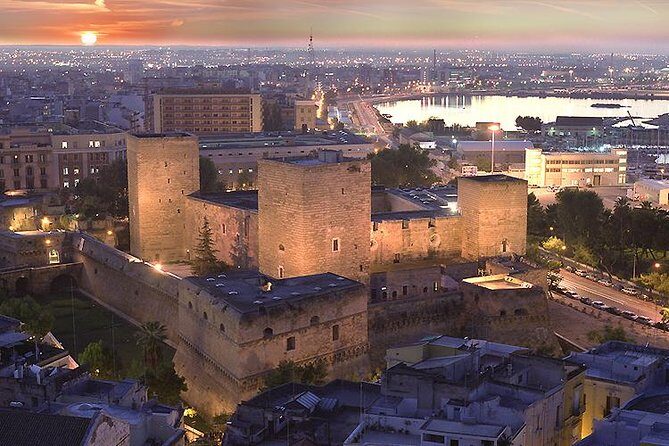
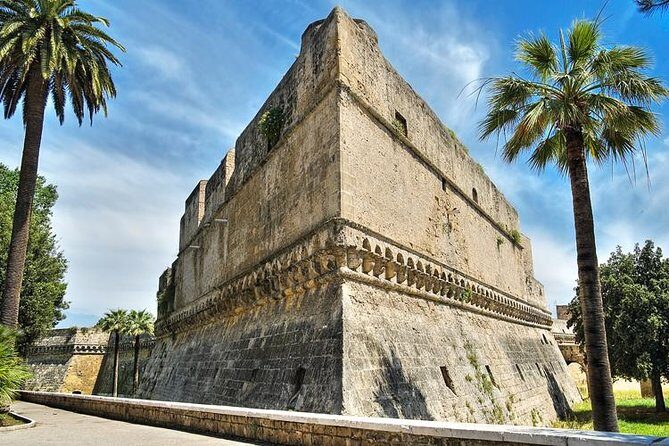
- Entering Castello Normanno Svevo: Norman-Swabian power, explained simply
- The Gipsoteca effect: why those 1911 models matter on a fortifications tour
- Strada delle Orecchiette and Arco Basso: food as living history
- Cattedrale di San Sabino: the outside view that connects to the walls
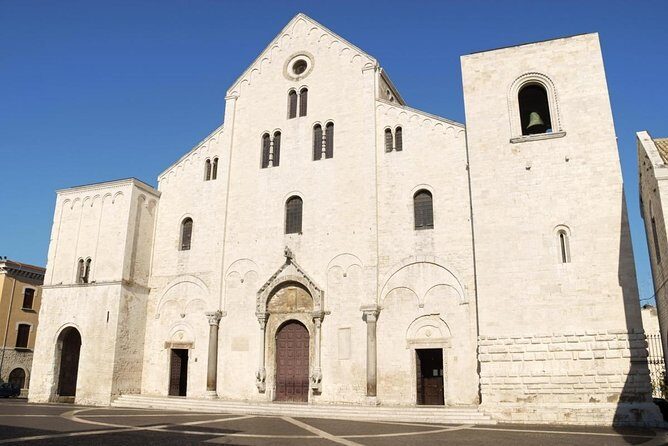
- Basilica San Nicola: Byzantine citadel energy from the outside
- The Wall Walk on Via Venezia: the moment the city layout clicks
- Fortino S. Antonio: old-port views plus traces of the medieval wall
- Piazza del Ferrarese: where the Sea Gate once stood
- Price and value: what you’re really paying for
- Who should book this tour (and who might want a different one)
- Timing tips: how to enjoy it without rushing
- Should you book the Tour of the Fortifications of Bari?
- FAQ
- How long is the Tour of the Fortifications of Bari?
- Where does the tour start and where does it end?
- What is included with my ticket price?
- Is there a group size limit?
- Are service animals allowed?
- What if the weather is bad or I need to cancel?
Key things I’d watch for before you go
- Gipsoteca inside Castello Normanno Svevo: 130 plaster models showing Apulian Romanesque masterpieces, recreated in 1911 by Pasquale Duretti and Mario Sabatelli.
- Real street action in Strada delle Orecchiette: you’ll pause at the alley by the Arco Basso as cooks shape orecchiette with quick hands.
- Exteriors only, on purpose: you’ll see the Cathedral of San Sabino and Basilica San Nicola mainly from the outside, then use the viewpoints to connect the defensive story.
- Wall walk on Via Venezia: this is where the “why here, why that bastion” explanation clicks with the city layout.
- Fortino S. Antonio for the highest old-city perspective: you’ll look toward the old port and trace medieval wall lines behind the Imperatore waterfront.
- Piazza del Ferrarese and the Sea Gate site: an ending point that ties the medieval defenses to the later Murat-era reshaping of the city.
Bari’s fortifications: the best way to read Bari Vecchia
Bari can look like a jumble of old streets until someone gives you a map of the city’s defensive logic. That’s the point of this tour. As you move from castle spaces to walls and bastions, the guide connects what you’re seeing to how Bari protected itself, step by step.
The route also gives you a useful perspective shift. Instead of treating old Bari as a set of landmarks, you experience it as a system: approaches by sea, strong points, and the later reshaping of the city. The best moment for many people is when the story stops feeling abstract and the wall walk makes the whole layout click.
Other city tours we've reviewed in Bari


Entering Castello Normanno Svevo: Norman-Swabian power, explained simply
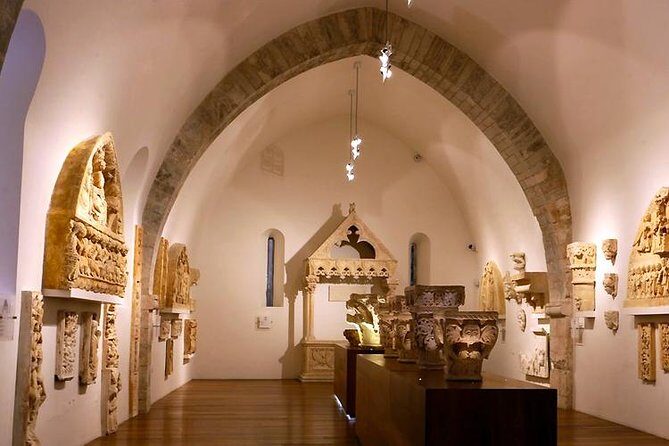
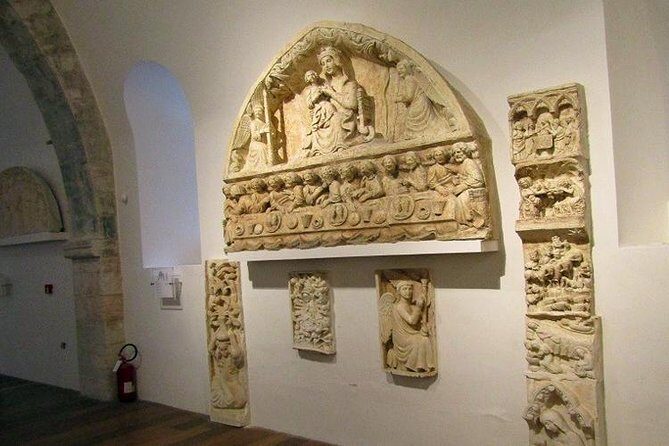
The tour begins with a complete visit to Castello Normanno Svevo and its Gipsoteca, with the entrance included in your price. If you’ve ever wondered how to make a fortress feel more than just thick walls, the Gipsoteca helps.
Inside, you can admire 130 models that reproduce masterpieces of Apulian Romanesque architecture. Think capitals, shelves, statues, and architectural details—faithfully reproduced in 1911 by sculptors Pasquale Duretti and Mario Sabatelli. This is one of those stops that pays off even if you’re not a “museum person,” because the models translate style into something you can actually see and compare.
What I like about this start: it sets a visual baseline before you go outside. You learn how the Romanesque language looks in stone, so later you’re more likely to notice patterns on church façades and architectural details as you pass.
Small consideration: this is the longest indoor segment (about an hour). If you’re the type who loves moving all the time, plan to slow down just a bit here and let the Gipsoteca do its job.
The Gipsoteca effect: why those 1911 models matter on a fortifications tour
The defenses in Bari weren’t built in a vacuum. Power, wealth, and culture all show up in architecture, including Romanesque work associated with the region. The Gipsoteca is basically a shortcut: it helps you recognize the artistic “style climate” of the times when the fortress world was active.
It also sets you up for one of the quieter skills this tour teaches: reading details. When you later look at churches around the old center—like San Sabino and San Nicola—you’ll be able to connect exterior forms and time periods to the broader story the guide is telling about Bari’s changes.
Strada delle Orecchiette and Arco Basso: food as living history
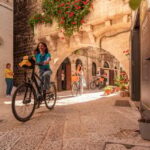
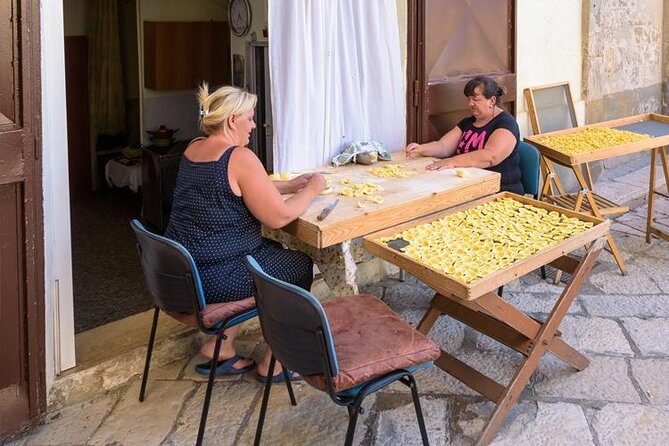
Once you leave the castle, the walk turns human and immediate. You’ll reach the alley by the Arco Basso, where food craftsmen shape orecchiette on the spot. The stop is short—about 15 minutes—but it’s one of the smartest “breaks” in the whole itinerary.
Why does it work on a fortifications tour? Because defenses aren’t only stone. They connect to trade, neighborhoods, and everyday life. Seeing pasta made right there reminds you that the historic center was always a place where people ate, worked, and gathered—inside and around the protected walls.
How to make the most of it: keep your pace steady, but don’t rush the shaping process. The whole point is watching those quick hands.
Cattedrale di San Sabino: the outside view that connects to the walls
Next comes Cattedrale di San Sabino, and you’ll see the Cathedral of San Sabino mainly from the exterior, with history and architecture explained in about 15 minutes.
This is a good “in-between” stop. You’re not stuck inside, and you’re not losing momentum. Instead, it acts like a visual anchor as the guide transitions from castle-level power to the urban fabric of Bari Vecchia.
If you like walking tours that keep moving while still making you look closely, this stop hits the right balance.
Other historical tours in Bari

Basilica San Nicola: Byzantine citadel energy from the outside
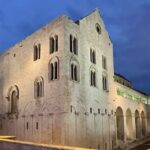
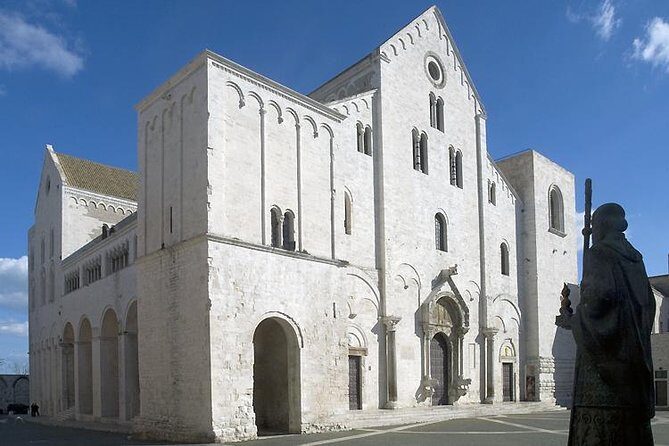
Then you’ll shift to Basilica San Nicola with a look tied to the Byzantine citadel and St. Nicholas. Again, you’re viewing mostly from outside, with about 20 minutes for history and the exterior/best-view focus.
This part of the tour is where the defense story gets broader. Bari wasn’t always defined by a single power. The Byzantine layer (and what it meant for the city’s strong points and identity) adds texture to everything you’ve seen so far.
Practical tip: keep an eye out for viewpoint opportunities. Even an exterior stop can be useful if the guide points out which lines and angles help you imagine how walls and sea access shaped the city.
The Wall Walk on Via Venezia: the moment the city layout clicks
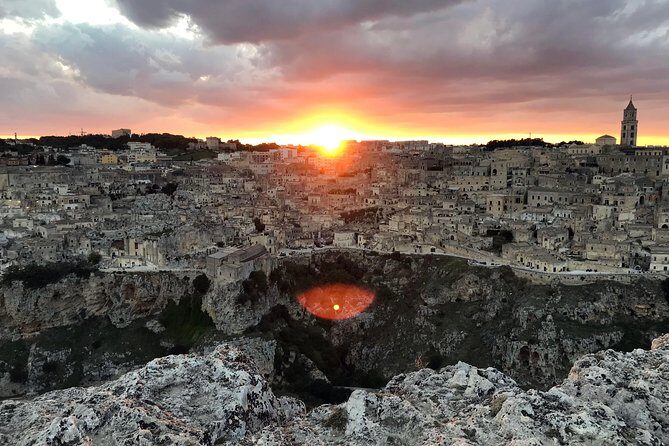
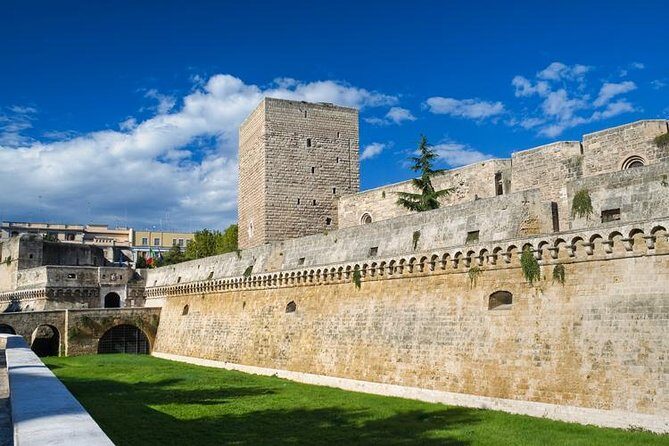
One of the most memorable parts is the walk on the Wall of Bari Vecchia along Via Venezia. This section is built for panoramas: you’ll get a wider view of the city and see bastions tied directly to the defensive plan.
This is where the tour stops being a list of monuments and becomes a route you can mentally redraw later. When the guide explains the city’s evolution—like the timeline from early wall origins to later changes—you start seeing the logic in the geography.
It’s also a good reality check. You’ll understand why some areas needed stronger protection and why certain spots became strategic.
What to consider: this is an outdoor segment. Wear comfortable walking shoes and keep weather in mind, because good visibility helps on a viewpoint-based stop.
Fortino S. Antonio: old-port views plus traces of the medieval wall
The tour then goes to Fortino S. Antonio, located in front of the old port. This rampart is described as one of the four defenses marking the walls of Bari until the nineteenth century.
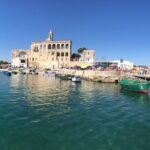
Even better, it’s the highest point of the old city in this stretch, so it gives you an embrace of the surrounding context—especially the medieval wall traces behind the Imperatore waterfront. The tour also points out the waterfront profile dating to the first half of the 20th century, which helps you see how old and new layers sit side by side.
Why this stop is valuable: you get the best “connect the dots” moment. The wall walk was panoramic. Fortino S. Antonio turns panorama into interpretation.
Small consideration: bring a layer if it’s breezy near the port. Forts and waterfronts can cool you down fast, even when the old streets feel warm.
Piazza del Ferrarese: where the Sea Gate once stood
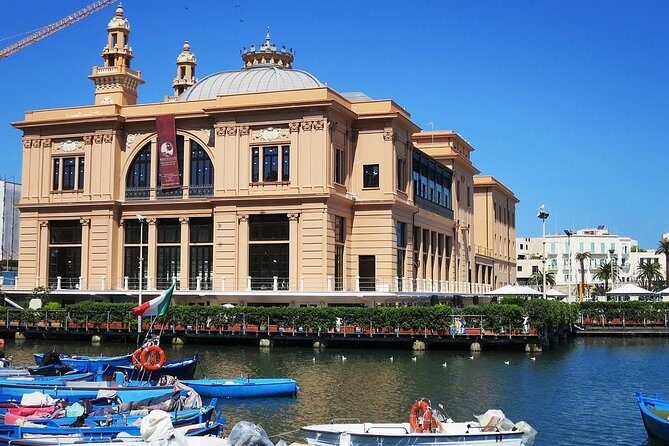
The final dramatic anchor is Piazza del Ferrarese, near where you finish the tour. Here, the guide connects the piazza’s past with its defensive role: it’s known as Piazzetta d’armi in earlier times and was obtained where the Sea Gate stood.
Today, it functions as a connection point between the historic center and the Murat-era village. You’ll also be guided through the sense of continuity—how the defensive city structure gave way to the reshaped urban layout.
The ending also includes a practical payoff: you end with a clear sense of where you are relative to the old entry-by-sea idea. Many people love endings like this because it gives the last stop meaning, instead of just bringing you back to the street.
Price and value: what you’re really paying for
The price is $53.36 per person for about 2 hours 30 minutes, and the tour includes a mobile ticket. The big value lever is that the Castle entrance ticket is included, while other stops in the sequence are listed with free admission.
So you’re paying for:
- a structured route that links fortress history to specific views,
- the indoor Gipsoteca visit with its 130-model Romanesque focus,
- and a guided walk that turns architecture and geography into an understandable story.
In plain terms, you’re not just buying access. You’re buying interpretation, pacing, and the “why this spot matters” explanations.
Who should book this tour (and who might want a different one)
I think this is an excellent fit if:
- you’re short on time and want the essentials of Bari Vecchia through the lens of defenses,
- you like history that connects to what you can actually see,
- you want a route that ends with viewpoints and city-structure context.
This may not be the best match if you strongly prefer light, low-information walking tours. One comment I’d pay attention to is the possible heaviness of historical data. If you want more stories and fewer dates, you might feel overloaded at times.
If that sounds like you, still consider booking. The route includes lively moments—like the orecchiette crafting stop—so you’re not stuck in a lecture the whole way. You’ll just want to tune your expectations.
Timing tips: how to enjoy it without rushing
This is not a marathon, but it’s not a sit-down museum day either. Wear comfortable shoes. The value of the wall segments depends on your ability to pause and look.
If you can choose your time of day, aim for earlier daylight for better visibility from the Via Venezia wall and Fortino S. Antonio. And if weather is iffy, plan for the possibility of a change, since outdoor elements matter for this itinerary.
Also, because the group cap is 30, you’ll likely get a better flow than on larger crowds. Still, expect to keep moving between stops.
Should you book the Tour of the Fortifications of Bari?
Yes, if your goal is to understand Bari Vecchia faster than wandering on your own. This tour gives you a clear defensive storyline, then backs it up with real viewpoints—castle interior first, then walls and port ramparts. The included castle visit and the Romanesque-focused Gipsoteca add real educational value, without turning the walk into a slow museum day.
Book it if you want history tied to street-level reality, with a small group pace and multiple moments that help you see the city as a system, not a random set of places. If you’re extremely photo-focused and don’t care about timelines, consider whether history-heavy commentary will feel right for you.
FAQ
How long is the Tour of the Fortifications of Bari?
The tour lasts about 2 hours 30 minutes.
Where does the tour start and where does it end?
It starts at Piazza Federico II di Svevia, 70, Bari, and ends at Piazza del Ferrarese, Bari.
What is included with my ticket price?
The price includes the entrance ticket for Castello Normanno Svevo (including the Gipsoteca). Other stops in the route are marked as free admission.
Is there a group size limit?
Yes. The tour has a maximum of 30 travelers.
Are service animals allowed?
Yes, service animals are allowed.
What if the weather is bad or I need to cancel?
The experience requires good weather. If it’s canceled due to poor weather, you’ll be offered a different date or a full refund. You can cancel for free up to 24 hours in advance for a full refund.