REVIEW · BARI
Bari Walk Through History
Book on Viator →Operated by Apulia Escapes · Bookable on Viator
Bari makes sense when you walk it. This small-group history walk strings together church crypts, Liberty-era streets, and sea views so you get a real feel for the city fast.
I like two things most. First, the guides—often Francesco, sometimes Adriano—tell Bari stories with the tone of a local friend, not a textbook. Second, you go from San Nicola and San Sabino (with crypt visits) to street-level food and architecture, including the Arco Basso orecchiette area and the Lungomare e Murat seafront.
One thing to consider: it’s a walking tour with short stops. If you want long museum-style time inside every site, this 3-hour format may feel a bit “hit the highlights, then move on.”
In This Review
- Key things I’d plan around
- Why this Bari walk works so well in 3 hours
- Start at Teatro Margherita, end at Castello Svevo
- Basilica San Nicola and San Sabino: the crypts are the secret win
- Madonnella’s Liberty architecture: pretty streets with a purpose
- Città Vecchia alleys: legends, customs, and real local rhythm
- Arco Basso and Strada delle Orecchiette: pasta-making as a living scene
- Lungomare e Murat: Art Nouveau seafront views and theatre exteriors
- Guides make the difference: Francesco and Adriano’s local stories
- Price and value: what $107.84 buys you
- What to wear and how to plan your day
- Who should book this, and who might skip it
- Should you book Bari Walk Through History?
- FAQ
- How long is the Bari Walk Through History tour?
- What language is the tour offered in?
- Is the admission ticket included for the church visits?
- How many people are in a group?
- Where does the tour start and end?
- Is the tour dependent on weather?
- Are service animals allowed?
Key things I’d plan around
- Crypt visits with free admission at Basilica San Nicola and Cattedrale di San Sabino
- A smart route from the historic core (Città Vecchia) to the Murat/French-quarter seafront
- Arco Basso and fresh-pasta watching on Strada delle Orecchiette
- Liberty architecture time in the Madonnella area from the early 1900s
- Photo-friendly views along Lungomare e Murat and theatre/Art Nouveau exteriors
- A small group (max 10) with an English-speaking guide and mobile ticket
Why this Bari walk works so well in 3 hours
Bari can look like a blur on your first day—church domes here, narrow alleys there, then suddenly you’re by the water. This tour keeps you moving in the right order so the city stops feeling random.
The best part is the mix. You don’t just do monuments. You bounce between sacred spaces (and their crypts), residential streets with early-1900s Liberty-style details, and the seafront where you can spot notable architecture from the late 1800s. It’s history that you can point at, not history you just read about.
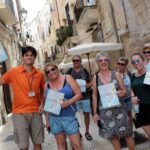
And because the group is kept small—up to 10—you’ll usually have time to ask questions without shouting over a crowd. That matters in places like Bari Vecchia, where the interesting bits are often subtle: a doorway detail, a local nickname, a story tied to a corner.
Other Bari walking tours we've reviewed in Bari


Start at Teatro Margherita, end at Castello Svevo
You begin at Teatro Margherita in Piazza IV Novembre. It’s a good “getting oriented” spot because you’re near the center of things right away.
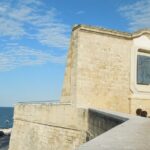
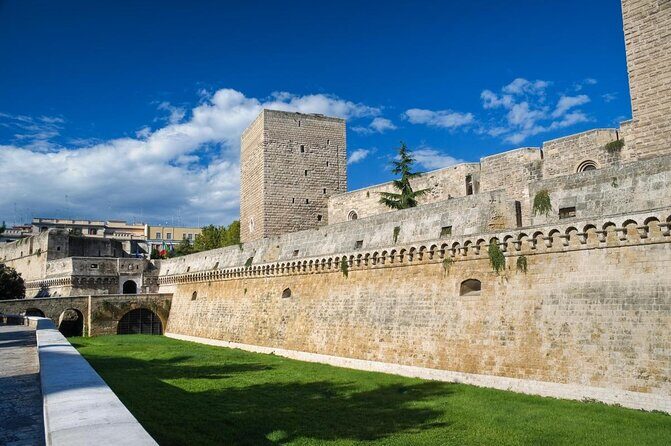
The walk finishes at Castello Svevo di Bari, near Piazza Federico II di Svevia. That ending point is practical: you’ll be close to a major landmark and an easy transition to lunch, aperitivo, or a longer wander on your own.
The route also tends to flow logically: you start with the most important church stops, then move outward into Madonnella, then back through the old alleys, and finally toward the waterfront. If you like tours that feel like they were designed by someone who actually walks Bari, this one fits.
Basilica San Nicola and San Sabino: the crypts are the secret win
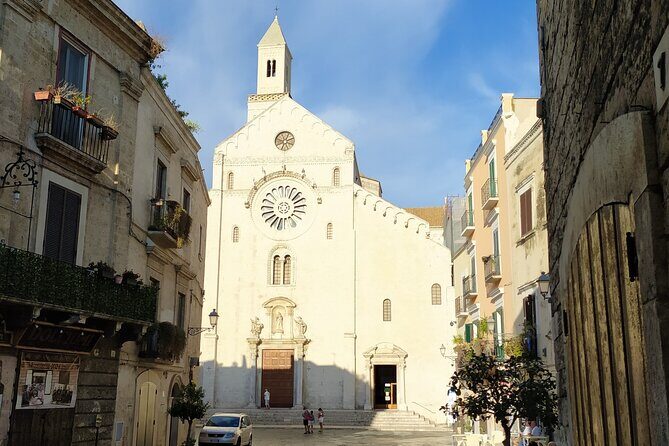
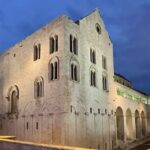
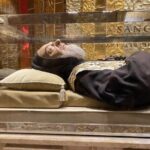
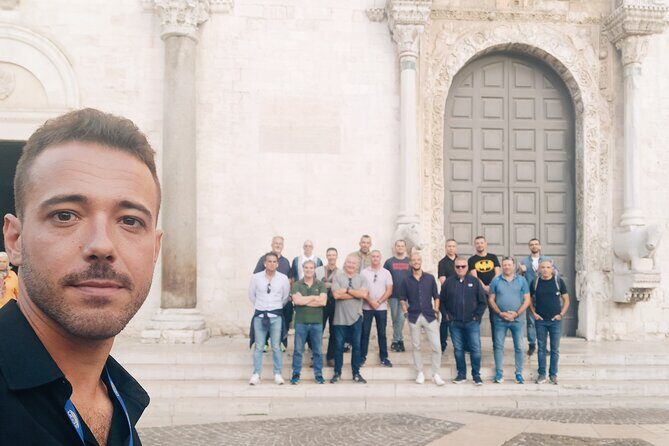
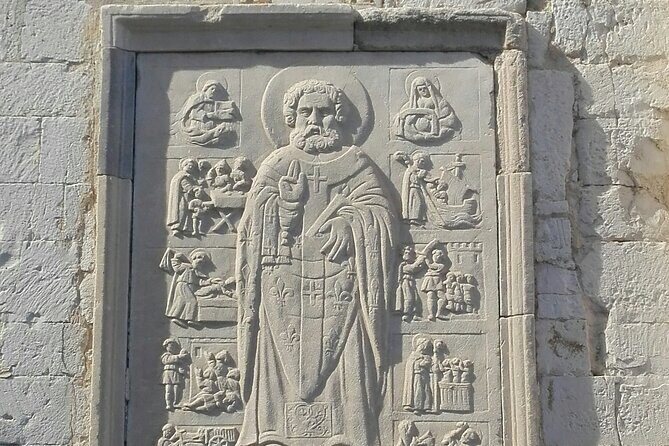
The heart of the tour starts with Basilica San Nicola. You’ll get an internal visit of the Catholic Christian basilica and the Orthodox Crypt. Even if you’re not the type to study religion in-depth, crypts have a way of making history physical. The air feels different, the space feels older, and the building reads like a layered story rather than one single era.
Next comes Cattedrale di San Sabino. You’ll do an internal visit of the cathedral and its crypt as well. Two church stops, two different “takes” on Bari’s past. It’s a smart way to understand that Bari has multiple roots—and you can see them in the architecture and the way sacred spaces were built to last.
Timing-wise, these stops are brief (around 15 minutes for San Nicola and about 10 for San Sabino), so don’t expect a slow, reflective, sit-and-stare museum experience. Instead, think of it as the “fast overview that points you toward what to look for later.” If one church really grabs you, you can always return after your tour with a clearer checklist.
Good news: admission for these internal visits is free. That’s real value because church entrances can add up on a walking day.
Madonnella’s Liberty architecture: pretty streets with a purpose
After the sacred stops, you shift into neighborhood walking, starting with Quartiere Umbertino – Madonnella. This is where Bari shows off its early-1900s Liberty architecture—a style known for decorative details, elegant shapes, and a softer, more decorative attitude than older medieval structures.
The tour doesn’t try to turn this into a photography tour, but you’ll naturally find yourself slowing down when you spot details on facades. Look for ornamentation around windows and doorways, and pay attention to how the street walls change as you move blocks.
This portion lasts about 20 minutes. It’s long enough to notice the style and short enough to keep you from getting worn out before the best old-town parts.
Città Vecchia alleys: legends, customs, and real local rhythm
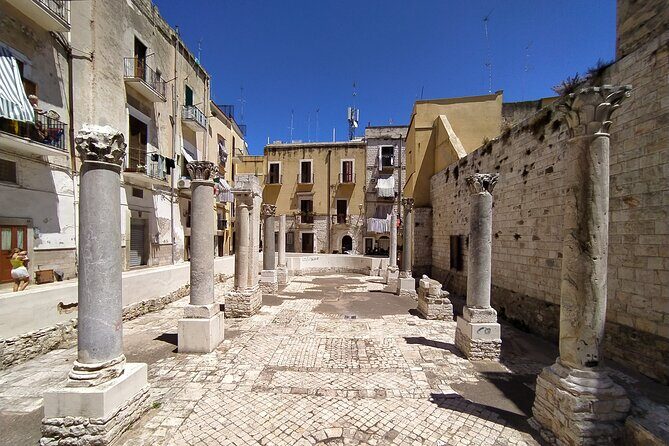
Then you step into Citta Vecchia – Bari, where the tour turns from architecture into atmosphere.
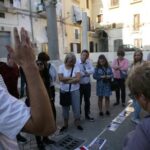
You’ll walk through historic alleys with a focus on the “how people lived” feel—along with stories and local customs tied to corners and building shapes. You’re not just seeing old stone; you’re learning what those spaces mean to Barians and how the city’s identity gets carried in daily routines.
This is the point where a great guide makes a noticeable difference. In the case of Francesco (and Adriano too), the stories often come with a practical edge—like what locals pay attention to, how to read street patterns, and little context that helps you understand why something is where it is.
Keep your expectations realistic here: the walk is moving, and time in the alleys is about an hour. If you want to linger in one lane for 20 minutes photographing doors, you may have to do that after the tour on your own.
There’s also an external stop for the castle area later, with information on internal visit times. So you get the landmark payoff without forcing you into a long ticketed detour.
Other walking tours we've reviewed in Bari


Arco Basso and Strada delle Orecchiette: pasta-making as a living scene
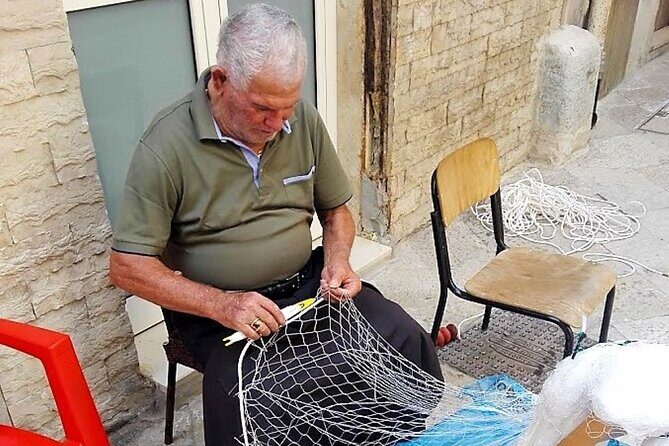
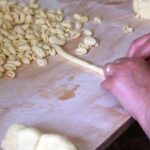
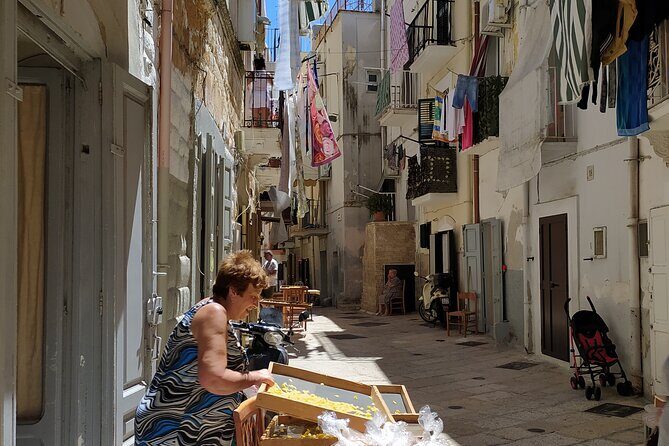
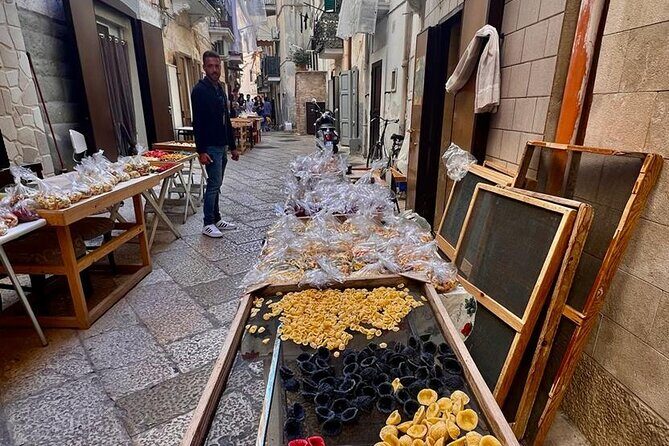
One of the most fun moments is the stop on Strada delle Orecchiette, near Arco Basso. Here you’ll see (and the guide will point out) the tradition of ladies preparing typical fresh pasta of Bari.
This is short—about 10 minutes—but it’s one of those “oh, so that’s what this place is about” experiences. Food traditions feel more real when you see them happening in the same kind of space where they’ve long taken place.
If you’re hungry afterward, that’s normal. Bari’s food culture is one reason people fall for the city quickly, and this stop gives you context for what you’ll want to eat next.
Tip: wear shoes that forgive quick turns. Old-town streets can be uneven, and you’ll want to keep your feet happy so your brain stays focused.
Lungomare e Murat: Art Nouveau seafront views and theatre exteriors
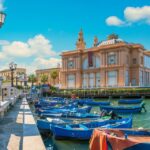
After the old-town and pasta stops, the tour heads toward Lungomare e Murat, walking between the French Murat quarter and the monumental seafront area. This is a big shift in mood: you trade tight alleys for open sightlines and sea air.
As you walk, you’ll get exterior looks at theatres and late 19th century Art Nouveau architecture, plus panoramic points where it’s easy to stop for a photo and take in the coastline.
Even if the light isn’t perfect, the seafront still does its job. You’ll leave with a clearer mental map of where the city opens up and how Murat’s architecture frames the waterfront.
If you’re the kind of traveler who likes a “walk + viewpoint + one good photo,” this is your payoff section.
Guides make the difference: Francesco and Adriano’s local stories
This tour has a common thread: the guides don’t just recite dates. They tell Bari stories with personality.
Francesco is repeatedly described as a friendly guide with deep local love, full of anecdotes and legends. Adriano also shows up as a kind, informative guide. One big theme in these guides’ style is pacing: they’ll slow down when there’s something worth noticing and speed up when you’ve gotten the point.
I also like that the experience can feel more like a conversation than a lecture. In a place like Bari, where the interesting details are often in what you’re not expecting, that conversational approach helps you look differently as you walk.
If you want the tour to work best for you, come with two things:
- one question you genuinely care about (food tradition, architecture, or why Bari looks the way it does)
- a willingness to notice details you’d normally pass by
Price and value: what $107.84 buys you
At $107.84 per person for about 3 hours, you’re paying for three things:
1) guided context for multiple neighborhoods
2) a focused route that avoids wasted backtracking
3) free admission for the internal church visits (San Nicola and San Sabino, including their crypts)
That “free entry” piece matters. You’re not paying extra to see the main interiors, and you still get stops that are normally ticketed.
You also get a mobile ticket, and the tour is offered in English—useful if you want a clear explanation without relying on your phone for every detail.
And yes, demand seems strong: this is often booked around 70 days in advance. If you’re traveling in a busy season or on a tight schedule, book early so you can pick the time that best matches your day.
What to wear and how to plan your day
This is a walking-heavy tour with short interior visits. So plan around that.
- Wear comfortable shoes for cobblestones and uneven pavement.
- Bring a light layer, because church interiors and coastal areas can feel cooler than the street.
- If you care about photos, bring a camera you can use quickly. The best viewpoints show up during the seafront segment.
In terms of your day, this is ideal as an early introduction to Bari—especially if you’ll be returning later on your own. You’ll get a mental map and a few “I want to come back and look closer” spots.
Who should book this, and who might skip it
This tour fits best if you:
- want a fast first-pass orientation to Bari without planning every step
- like churches but also want the walk to include neighborhoods and street life
- enjoy food-related culture, especially the orecchiette tradition
- prefer small groups and a guide who tells stories in a natural way
You might skip it if you:
- dislike walking and prefer longer museum-style time
- need long, quiet time inside buildings (the visits here are brief)
- are traveling on days when you know weather will be rough, since the experience requires good weather
Should you book Bari Walk Through History?
If you’re weighing a “guided walk vs. wandering on your own,” I’d book this when you want Bari to make sense quickly. The free crypt visits, the Liberty architecture stop, the orecchiette street scene, and the seafront viewpoints make this feel like a well-balanced overview without dragging you all day.
Also, the guide factor is huge here. Names like Francesco and Adriano come up because the experience is built around stories and local context, not just checking off photos.
If you have 3 hours and you want a smart introduction to Bari, this is an easy yes.
FAQ
How long is the Bari Walk Through History tour?
It runs for about 3 hours (approx.).
What language is the tour offered in?
The tour is offered in English.
Is the admission ticket included for the church visits?
Yes. The internal visits for Basilica San Nicola and Cattedrale di San Sabino are listed with free admission tickets.
How many people are in a group?
The tour has a maximum of 10 travelers.
Where does the tour start and end?
It starts at Teatro Margherita, Piazza IV Novembre, Bari and ends near Castello Svevo di Bari, Piazza Federico II di Svevia.
Is the tour dependent on weather?
Yes. It requires good weather. If it’s canceled due to poor weather, you’ll be offered a different date or a full refund.
Are service animals allowed?
Yes. Service animals are allowed.