REVIEW · BARI
Valle d’Itria Tour: Polignano, Ostuni e Locorotondo, da Bari
Book on Viator →Operated by ApuliaSmarttour · Bookable on Viator
Three Puglia towns, one easy day. You get a bus ride from Bari plus a self-guided plan for exploring cliff views, the White City, and limestone lanes at your own pace. The format is simple: you arrive, you walk, you return to the bus on time.
I especially like the mix of scenery—sea caves at Polignano, the hilltop glow of Ostuni, and Locorotondo’s tight, white streets. I also like that the price includes the transfer by bus/minivan and the parking fees, so you’re not stuck solving transit and “where do we park?” problems.
The main drawback is time. Each stop is tight, and there’s no live guide—so you’ll want a charged phone and comfort using Google Maps to find the bus again.
In This Review
- Key highlights you’ll feel right away
- Price and what $65.90 really covers from Bari
- How the self-guided plan works (no guide, Google Maps links, tight timing)
- Stop 1: Polignano a Mare’s cliff old town and sea caves
- Stop 2: Ostuni, the White City and Santa Maria Assunta cathedral views
- Stop 3: Locorotondo’s cobbled chianche lanes and cummerse houses
- Timing, bus parking, and how to not miss the pickup
- What to bring (small items that save the day)
- Who this tour suits best (and who might want a different format)
- Should you book this Valle d’Itria Tour from Bari?
- FAQ
- How long is the tour?
- What does the price include?
- Is there a guide during the day?
- Do I need tickets for Polignano, Ostuni, or Locorotondo?
- What language is the experience offered in?
- Is bottled water included?
- Can I cancel for a full refund?
Key highlights you’ll feel right away
- Self-guided towns, not a lecture: you follow a digital itinerary plus a written brochure instead of a tour guide.
- Sea cliffs to hill towns in one shot: Polignano, Ostuni, and Locorotondo cover three very different Puglia vibes.
- Free entry at each stop: each location is listed as admission ticket free, so you’re not paying gate fees.
- Air-conditioned transport with parking handled: fewer logistics headaches during the ride.
- Driver available in Italian: useful if you need help, even though the experience is offered in English.
Price and what $65.90 really covers from Bari
This tour is priced at $65.90 per person for about 10 hours on the clock. For many people, that cost feels fair because the big fixed expenses are handled for you: you get a transfer by bus/minivan, air-conditioned vehicle, and parking fees. That alone saves time and stress if you’re traveling without a car.
Also, you’re not buying a “guided tour” product in the classic sense. What you’re buying is transportation plus a structured day plan: written brochure, mobile ticket, and a way to navigate each town using provided maps. That’s why the value depends on your style. If you like wandering and making your own choices, this is a good deal. If you want constant commentary and organized sightseeing, you may feel under-served.
Other Polignano a Mare boat & cave tours we've reviewed in Bari
How the self-guided plan works (no guide, Google Maps links, tight timing)
Here’s the deal: this is not a guided bus with a person talking nonstop. Instead, you get a digital itinerary with links to Google map navigation and a brochure for what to see in each town. In practice, that means you’re in charge of your walk—how long you linger at a viewpoint, whether you want to chase a side street, and how fast you move between key points.
The upside is control. You can skip a section if it doesn’t grab you. You can spend extra time where the light is good or where you find a café you actually want.
The catch is timing. You must be back at the bus at the appointed time, and the bus parking location is part of the navigation setup. A few practical moves help a lot:
- Start with your phone’s battery at a strong level.
- Keep mobile data or offline maps ready (as much as your phone allows).
- Plan your return walk like you’re late on purpose—because you can always slow down, but you can’t “catch up” if the bus leaves.
Stop 1: Polignano a Mare’s cliff old town and sea caves
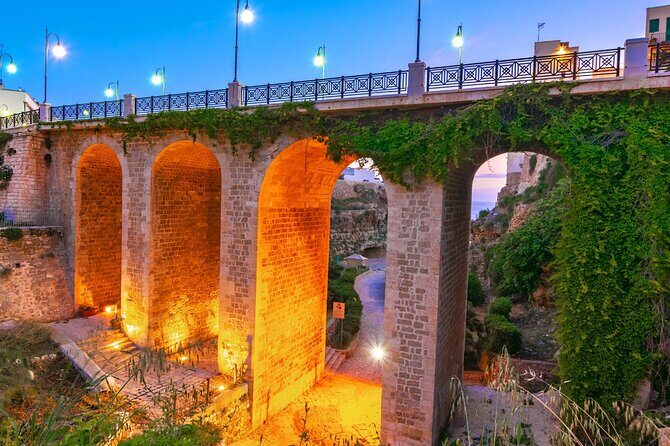
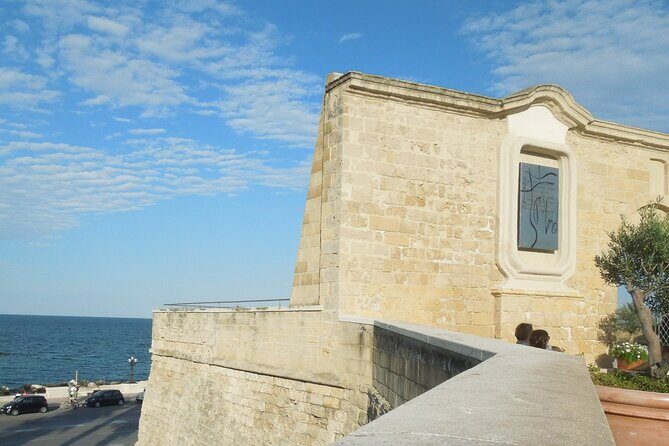
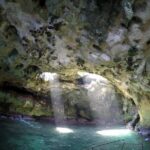
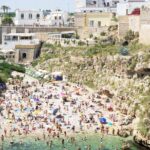
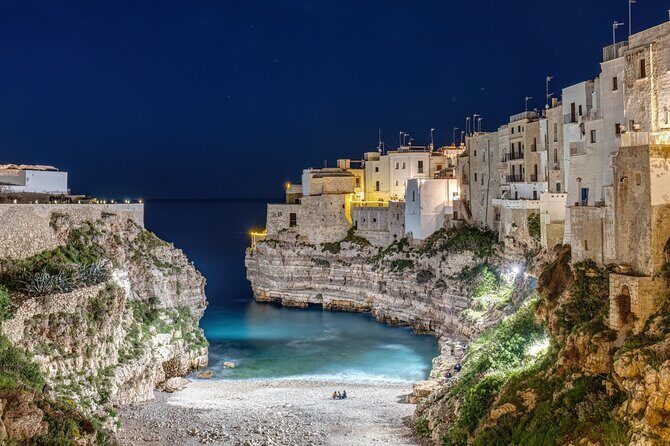
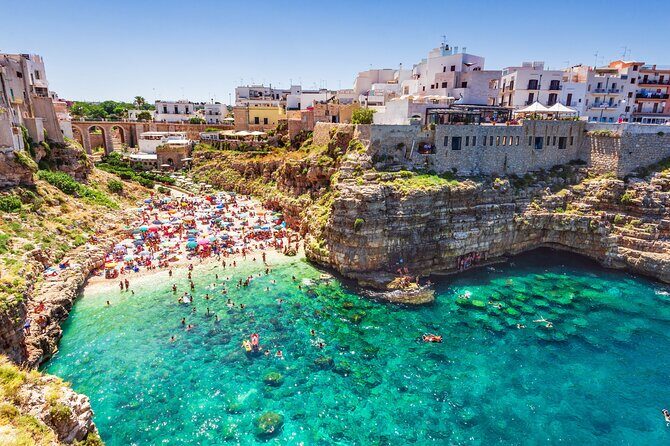
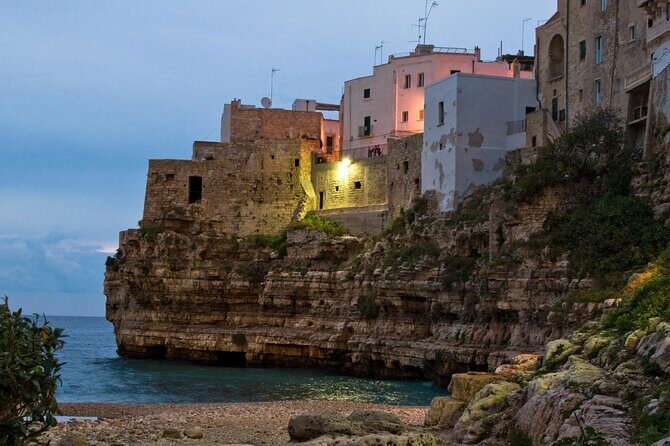
Polignano a Mare is why a lot of people pick this route. The town sits along dramatic cliffs, and the center feels shaped by changing powers over time, with traces of Arab, Byzantine, Spanish, and Norman influence. You’ll also see the remnants of the four defensive towers that once framed the old town.
Two details make Polignano memorable:
- It’s the birthplace of Domenico Modugno, the singer behind Nel blu dipinto di blu.
- The coast is carved with sea caves and crystal-clear water, giving you those postcard cliffs you came for.
You get about 2 hours, and the stop is listed as admission ticket free. With that kind of timing, don’t plan to “do it all.” Plan to do the best part: the viewpoints around the historic center and the cliffside atmosphere. You’ll likely spend your time walking between overlooks rather than sitting still.
Practical consideration: Polignano involves steps and uneven streets near the viewpoints. Comfortable shoes matter more than fancy sandals. If your legs aren’t feeling great, shorten your route and focus on one or two viewpoints instead of sprinting for every photo.
Stop 2: Ostuni, the White City and Santa Maria Assunta cathedral views
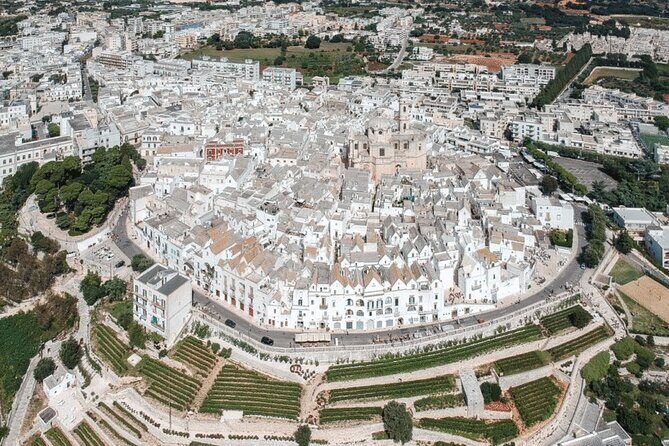
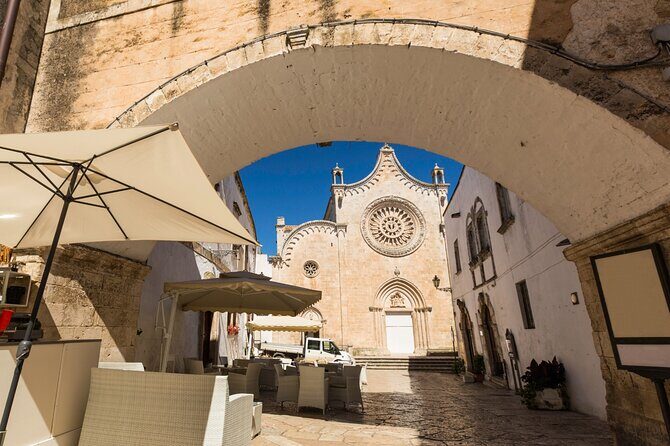
Ostuni is the hilltop White City that looks almost unreal in person. The houses are whitewashed with lime, and from the central lanes you get sweeping views over the countryside and toward the Adriatic.
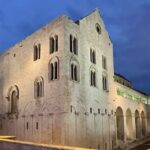
The big anchor is the Cathedral of Santa Maria Assunta, an architectural mix often described as Romanesque-Gothic. The façade has a standout rose window, and the interior is known for frescoes and detailed artwork. From there, side streets lead to terraces where you can stop, look, and let the town breathe.
Ostuni also has a natural social center: Piazza della Libertà, with cafés and restaurants around it. If you want lunch, this is where you’ll feel the most options.
You get about 2 hours 30 minutes here, which is good—Ostuni can eat time because the lanes invite side wandering. This is also a great stop for a slower pace if the weather is pleasant.
One watch-out: town centers can be busy and walking-heavy. You’ll probably want water breaks, but bottled water isn’t included. If you’re visiting in warmer months, plan your walk so your longest routes happen earlier or later in the day, not at peak sun.
Stop 3: Locorotondo’s cobbled chianche lanes and cummerse houses

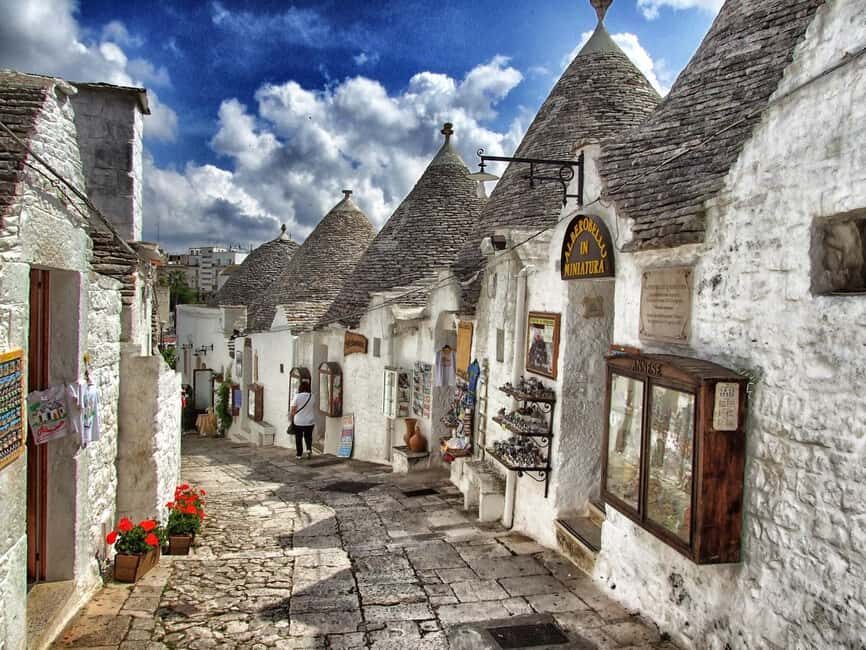
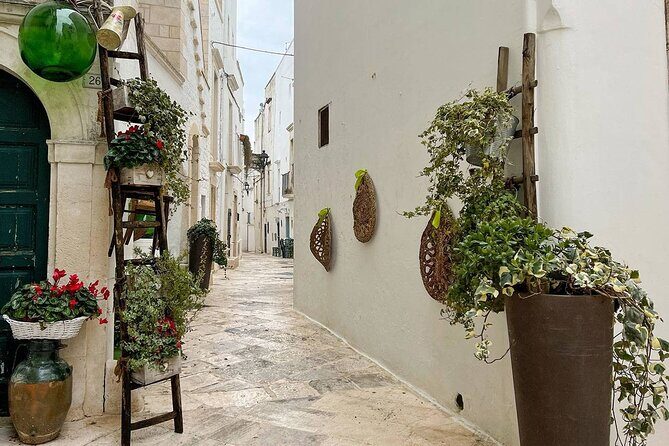
Locorotondo is where Puglia turns more quiet and more architectural. The historic center is known for harmony in form, and it’s recognized by the Touring Club with an Orange Flag for how the town feels and how walkable it is.
What you’ll notice fast:
- White houses, tight streets, and stone paths.
- The cobbled ground made from local stone called chianche.
- Doorways that look carefully crafted, not random.
Locorotondo also has a distinctive house geometry. Many homes have sloping roofs made from two limestone slab slopes known as cummerse. Some of these restored structures are used in a diffused hotel style, so you may see the town’s “lived-in” side rather than only storefront tourism.
You get about 2 hours, admission ticket free. That’s enough to do a solid loop, find a viewpoint, and enjoy a slow coffee if you manage your return walk back to the bus.
Practical consideration: Locorotondo’s beauty is in the small scale. If you’re trying to cover it like a checklist, you’ll miss what makes it special. Pick a route loop you can repeat, then add a short detour when something looks photogenic.
Other Ostuni & white city tours we've reviewed in Bari




Timing, bus parking, and how to not miss the pickup
This is the one place where the whole day can either feel smooth or stressful. Since there’s no guide steering you step-by-step, your navigation and your sense of time matter.
A few things that keep this experience working:
- The itinerary includes Google map links for where to meet the bus.
- You’re given an exact pickup plan, so arriving early can help you take control.
- You need to be back at the bus when it’s time—no lingering for one last photo if you’re already cutting it close.
Some reviews mention that bus experiences can include very loud music, especially on the return to Bari. Even if you don’t mind music, it can be tiring on a long day. If you like calm, bring earplugs and keep that “rest” option alive.
Also, expect walking at each stop. Even if the bus gets you close, you’ll likely walk into town and walk back. If you want the most comfortable day, build in a slower pace rather than trying to “outwalk the schedule.”
What to bring (small items that save the day)
This tour doesn’t include bottled water, so I’d treat water as your first priority. Pack a refillable bottle if you can, and bring something small to snack on if your meal timing gets pushed.
A few other practical items:
- A charged phone (navigation is a core part of the day).
- A phone charger you can actually keep handy while you walk.
- Comfortable walking shoes for stone lanes and cliffside routes.
- Sun protection in warmer months (white towns still get hot fast).
If you’re the type who likes time to feel calm, also plan a “one-stop lunch” strategy—pick where you’ll eat in one town and don’t spend the whole hour deciding.
Who this tour suits best (and who might want a different format)

This experience fits independent explorers who want transportation and structure, but prefer choosing what to look at on the ground. If you like wandering, taking photos at your own pace, and not needing a live guide to tell you where to stand, you’ll probably love the freedom.
It’s less ideal if you strongly want:
- A live guide explaining history as you walk.
- A constantly narrated route.
- A guaranteed long stop for deep sightseeing at just one place.
You’ll also want to be comfortable with a day built on short visits. Three towns in one day is fun, but it’s not a “settle in” plan.
Language-wise, the experience is offered in English, while the driver is available in Italian. Since there’s no guide listed, you should plan to rely on the brochure and map instructions more than conversation.
Should you book this Valle d’Itria Tour from Bari?
Yes, if you want a low-stress way to hit three of Puglia’s most recognizable towns—Polignano a Mare, Ostuni, and Locorotondo—without juggling trains, rentals, or parking. The value makes sense because transport and parking are included, and each stop is listed as admission ticket free. For the price, you’re paying for time on the ground plus the logistics wrapper.
No, if you hate self-navigation or you’re expecting a true guided day with a person leading every step. The whole experience depends on you using the provided mapping plan and respecting the return times. If that sounds like effort rather than freedom, you may feel rushed.
If you’re flexible, pack smart, and keep your phone charged, this is a strong way to see the sea-to-hills contrast of the Valle d’Itria area in one workday-length outing.
FAQ
How long is the tour?
It runs about 10 hours, including travel time between Bari and the three towns.
What does the price include?
Your ticket includes transfer by bus/minivan, an air-conditioned vehicle, parking fees, and a written brochure. A driver is available in Italian.
Is there a guide during the day?
No. This is a self-guided experience, with a brochure and navigation support (including Google Maps links).
Do I need tickets for Polignano, Ostuni, or Locorotondo?
Admission is listed as ticket free for each of the three stops.
What language is the experience offered in?
The tour is offered in English.
Is bottled water included?
No, bottled water is not included.
Can I cancel for a full refund?
Yes. You can cancel up to 24 hours in advance for a full refund.